Over nearly a decade I've worked across the whole funnel — paid media and acquisition, conversion optimisation, CRM, lifecycle and retention, subscription growth, copy and content, PR and partnerships, and the analytics underneath it all. I've done it for founder-led brands in wellness, supplements, ecommerce and travel, across Australia, Hong Kong, the UK and the US.
My bet is simple: as AI absorbs the execution, the operators who know what good looks like across a whole business — and who can direct AI to build it — matter more than narrow specialists. That's why this page is broad on purpose. The depth is still here; it's just all in one place.
US beauty-tech brand selling shower-water filters — hardware plus a replacement-filter subscription · eight-figure brand, selling internationally
A deep audit of why an eight-figure brand was losing customers — built from every order the business had ever taken, over 100,000 of them.
I worked out, in detail, where this eight-figure online brand was leaking customers and revenue — and what to do about it. Most audits look at a sample or trust the dashboards. I went to the source: every order the business had ever taken, well over a hundred thousand of them.
That meant tracing where every sale actually came from, following cohorts of customers over time to see who stuck around and who dropped off, working out the true profit on each order, and turning it all into a 90-day plan with clear checkpoints so the client could hold the numbers to account.
The brand's sales ran through a stack of different tools — their store (Shopify), their subscription system (Loop), a separate checkout funnel (CheckoutChamp), their email platform (Klaviyo), their sign-up tool (Alia) and their ad accounts (Meta and Google). Each one tells its own version of the story, and they rarely agree. Rather than trust any single dashboard, I rebuilt the numbers myself from the raw order data and checked every tool against it. That's how the audit surfaced revenue and subscriptions that were invisible inside the individual systems. Being fluent across that many platforms at once, at this scale, and knowing not to take any of them at face value, is most of what makes an audit like this hold up.
Bricks-and-mortar chiropractic & musculoskeletal clinic · Uckfield, East Sussex
Found the clinic's real cost-per-patient was far higher than reported — and a six-figure revenue gap hiding inside the business.
This one came through a friend of a friend — someone struggling in his business who I wanted to help out. I audited Phoenix Health Hub's entire patient-acquisition system — Google Ads, the landing page, booking attribution, and the clinic's own economics.
The headline finding: they thought they were paying one number per patient, and the real number was far higher. Their conversion tracking was counting button clicks, call taps and email clicks as "bookings," so the reported cost per patient was badly understated, and Google had been optimising the budget toward the wrong signal for months. I proved it by cross-referencing the ad data against their actual booking system, where only the real patients showed up.
Then I traced the drop-off to its root: the landing page took the better part of half a minute to load on mobile, and most mobile visitors — the large majority of the traffic — left before it even appeared. The budget had been paying for people who never saw the booking button.
I also surfaced a bigger opportunity sitting inside the clinic itself — a gap between how many patients bought a treatment package and how many could — and put a number on the revenue being left on the table.
Early 2026
Going all-in on AI
A concentrated, deliberate learning period
Taught myself to build with AI from scratch — five TypeScript integration servers, ~65 reusable skills, Anthropic-certified.
5MCP servers (TypeScript)~65reusable AI skills3Anthropic certifications
After stepping back for a period, I came back to find AI had changed the ground underneath marketing. Rather than pick up where I left off, I spent a focused stretch actually learning to build with it — not just use it — because I could see it was the biggest lever for everything coming next.
I started where the leverage was highest: the skill-builder itself. I took Anthropic's own skill-creator, stress-tested it, and rebuilt it — then authored skills with it and checked the output for consistency run to run, so the results were reliable rather than just plausible.
I built this system to run my own work across several projects: a structured context and governance layer for how the AI operates, agents and sub-agents for different jobs, five custom integration servers written in TypeScript, and a library of around sixty-five reusable, versioned skills — including one that builds and evaluates other skills, and a knowledge-graph builder.
I'm certified by Anthropic (Agent Skills, Subagents, AI Fluency), and I've published on AI systems on LinkedIn along the way. The honest proof isn't a slide — it's that the whole working setup behind my day-to-day was built, by me, as the result of that learning.
2024 – 2025
Men's Health Summit — Producer & Host
International virtual summit · speakers across the US, Australia, Finland and beyond
Produced and hosted a 12-expert virtual summit, solo — end to end.
I produced and hosted a virtual summit on natural testosterone optimisation — twelve experts, from practising physicians to PhDs to researchers — and I owned every part of it solo.
That meant finding and booking the speakers, producing and recording the interviews, building the platform and the sales funnel, writing all the copy, pricing and selling the tickets, and running the whole attendee experience from sign-up to delivery.
The line-up was genuinely credentialled. Speakers included, among the twelve:
Dr Amy Pearlman — board-certified urologist
Dr Olli Sovijärvi — medical doctor; Chief Medical Officer, Biohacker Center, Helsinki
Dr Tyler Panzner — PhD, molecular & cellular pharmacology
Thomas Seager, PhD — professor, Arizona State University
Shawn Wells — biochemist and author
Carrie Bennett — circadian-health educator
The sessions ran across endocrinology, genetics, circadian biology, cold exposure, mitochondrial health, sexual health and supplementation.
I also handled the commercial side: I brought on the sponsors — health and performance-tech brands including Chroma, Morozko Forge, Daylight Computer Co. and Vasper — and built out the offer, stacking the talks, recordings and partner bonuses — including courses from speakers like Carrie Bennett and Cam Fraser, and brands like RaOptics — into the package. The bonus stack alone was worth over £1,700 to ticket-buyers.
Keep up the great work, love it! Especially as I'm in the field as a Swiss longevity and lifestyle medicine MD that is also into biohacking. Those type of summits are great and contain a lot of information not talked about in traditional medicine.Michael Gaille — Swiss longevity & lifestyle medicine MD
British subscription supplement brand — mushroom & adaptogenic blends, sold retail and D2C · Cambridge
Owned e-commerce growth end to end — and more than tripled the flagship's mobile conversion.
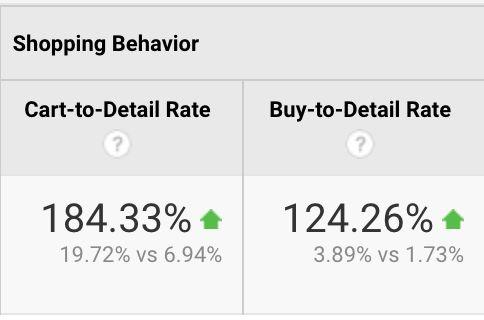
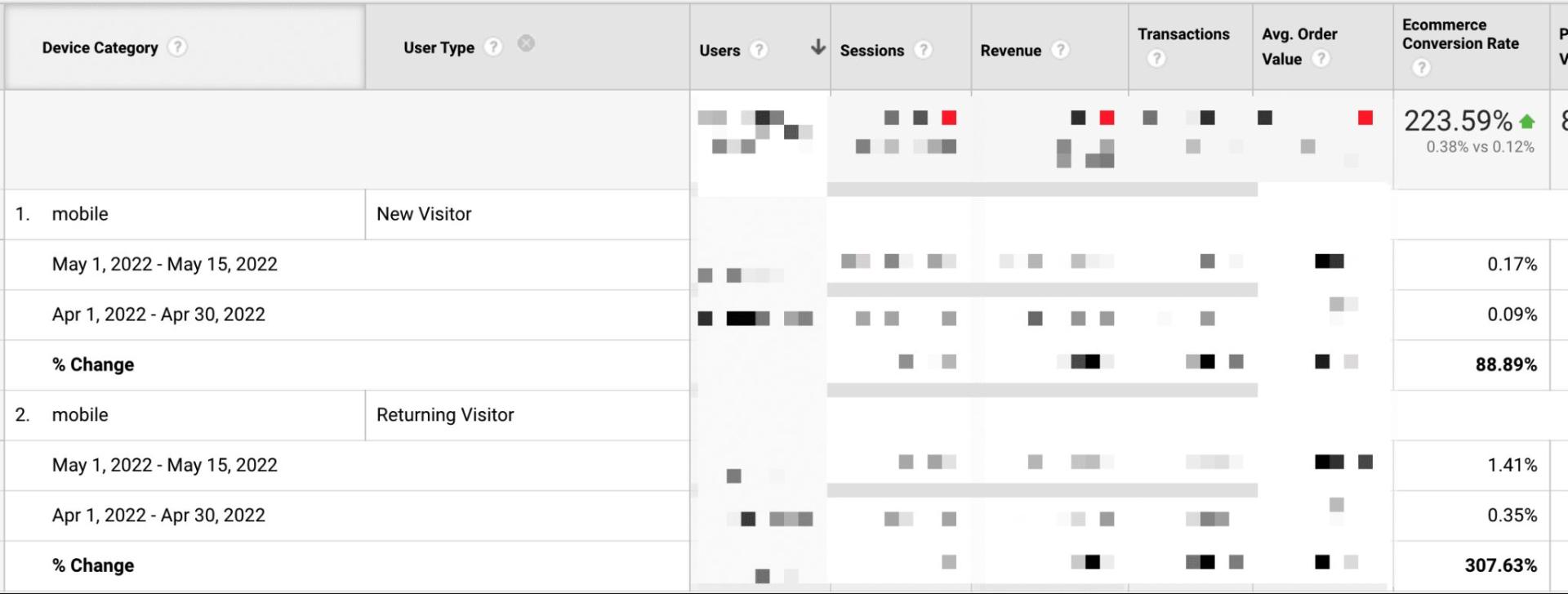
+223%mobile sales rate+184%visitors adding to cart+124%visitors buying
I owned online growth end to end for this wellness brand — getting more of their visitors to buy, keeping customers coming back, making sure the ad spend pulled its weight, and all the data behind it. The longer I was there, the more hats it turned out to involve.
Choosing the agency.
One of my first jobs was to drive out to their incumbent marketing agency and audit them on-site — and it turned out they weren't performing. So I ran a proper competitive selection, weighing up a shortlist of replacement agencies, and we chose from there.
Building the pages and funnels.
I built all of their product sales pages and funnels — the funnel architecture, the page builds, and the copywriting. We were testing multiple offers across five main products, so at one point I was managing around thirty landing pages. I also initiated and led the redesign of the product and category pages with a designer, and where we needed more hands I ran full hiring processes for freelance copywriters and developers. I also worked the brand's in-person events and field sales, including at ExCeL London.
Turning samples into subscribers.
The customer journey started with a low-risk offer — a seven-day sample pouch for little more than the cost of shipping, with the exact offer varied as we tested. A nurture sequence of around nine days then led to a full-price offer: one on subscription, or three or five in bulk. A longer sequence carried on after that to keep customers coming back. The pages, offers and sequences were different for each product — I wrote and built them all in Klaviyo.
Reading the customer.
The brand was in its very early days, so a lot of the work was establishing product-market fit. I drove acquisition through the funnels, then segmented the strongest customers and ran one-to-one jobs-to-be-done interviews with them — how they'd found The Herbtender, what they were really hiring the product to do, and where they'd struggled — which I scheduled, ran and wrote up myself. Alongside that I went through competitor reviews by hand to surface the worries customers actually had, then rewrote the website and email messaging around them. For the money side I used a tool called Triple Whale to follow cohorts of customers over time — what it cost to win them, what they spent, and what they were worth in the long run — so decisions about where to spend were made on real customer behaviour rather than flattering top-line numbers.
Building the practitioner programme.
I set up their affiliate programme — for selling through herbalists and other practitioners — on UpPromote, and onboarded the first affiliates. It was built as a sales channel, and to give the brand social proof and a layer of expert credibility.
The mobile numbers.
Around 80% of the traffic was on mobile, so that's where I focused the work. On the flagship product, the share of visitors who added it to their cart went from 6.94% to 19.72% — and the share who actually bought from 1.73% to 3.89%. Overall, mobile sales rate rose 223% — a result solid enough to be statistically confident it was real, not chance.
Flagship product, mobile optimisation — before and after.Mobile conversion rate, up 223.59% (client figures redacted).
2022
Growth experiment — r/sleep_better
Reddit acquisition test · sleep-science community
A deliberate test, not a side project: could a community be built from a cold start purely through Reddit DM invites, and how fast? I spun up a sleep-science subreddit, r/sleep_better, and drove it with direct-message outreach — at its quickest it was pulling 50–100 new members a day, a couple of thousand in the first few weeks. Once I had the answer on how quickly the channel could compound, I wound it down. The point was the acquisition mechanic, not the community.
2021 – 2022
MindLabs — CRM & Growth Lead
Software-as-a-service meditation & mindfulness app · London
Moved a meditation app's entire customer-messaging setup onto a new platform — and led a team of 7+ to deliver it on time.
A scoped, UK-based contract with a simple brief: set up the foundational system for talking to their customers — the emails, notifications and messages an app sends to keep people engaged.
I led the whole move from one platform (Mailchimp) to a more powerful one (Braze), and before touching anything I did the research to define how it would all be structured — how customers would be segmented, and how their actions would be tracked — so it stood on solid foundations. The app was live and in active use throughout, so I worked closely with the technical team to coordinate the move without anything breaking for existing users. I managed an internal team of five-plus and two external technical partners as the single point of ownership, delivered the move on time with minimal disruption — and then kept going, into website tracking, improving how the app showed up in the App Store, and an experimental paid test on Reddit.
Ryan joined MindLabs on a three month contract with a very direct brief, to help us set up our foundational CRM strategy for success. What we got was A LOT more.
Ryan showcased exceptional project management skills, helping us re-platform our CRM infrastructure from MailChimp to Braze. Ryan took this brief and owned it from start to finish, ensuring that all stakeholders were clearly informed throughout, ensuring we had the foundational data structure to support MindLabs engagement comms and automation strategy, and helping us build thumb stopping content.
Ryan started this project with in-depth research and analysis which drove key decisions. He then curated a project plan which was as structured as it was agile. This enabled the project to run as smoothly as can be. Ryan also showcased his ability to manage an internal team of 5+ and two external technical partners, with ease.
His ambitious, growth-hacker mindset also crossed over into our digital marketing efforts. Ryan helped us with improving website tracking capabilities, App Store optimisation and even running an advertising test on Reddit, which was all his doing.
Ryan is an asset to any team, he came into a fast paced early start-up and led from the front. I would love to work with Ryan again in the future and would be happy to be a referee for anyone thinking of working with Ryan in the future.
Invited back to speak to students on a panel about careers, entrepreneurship and real-world experience.
2021
Pro-bono — Partnerships & PR for a grocery startup
On-demand grocery startup · UK
Some of my favourite work hasn't been paid at all. I've advised a number of brands for free over the years, and it comes from two places: I genuinely love this stuff — marketing and wellness are a real part of my life, not just a job — and a lot of the pro-bono work has been for friends, or for brands I actually use and believe in.
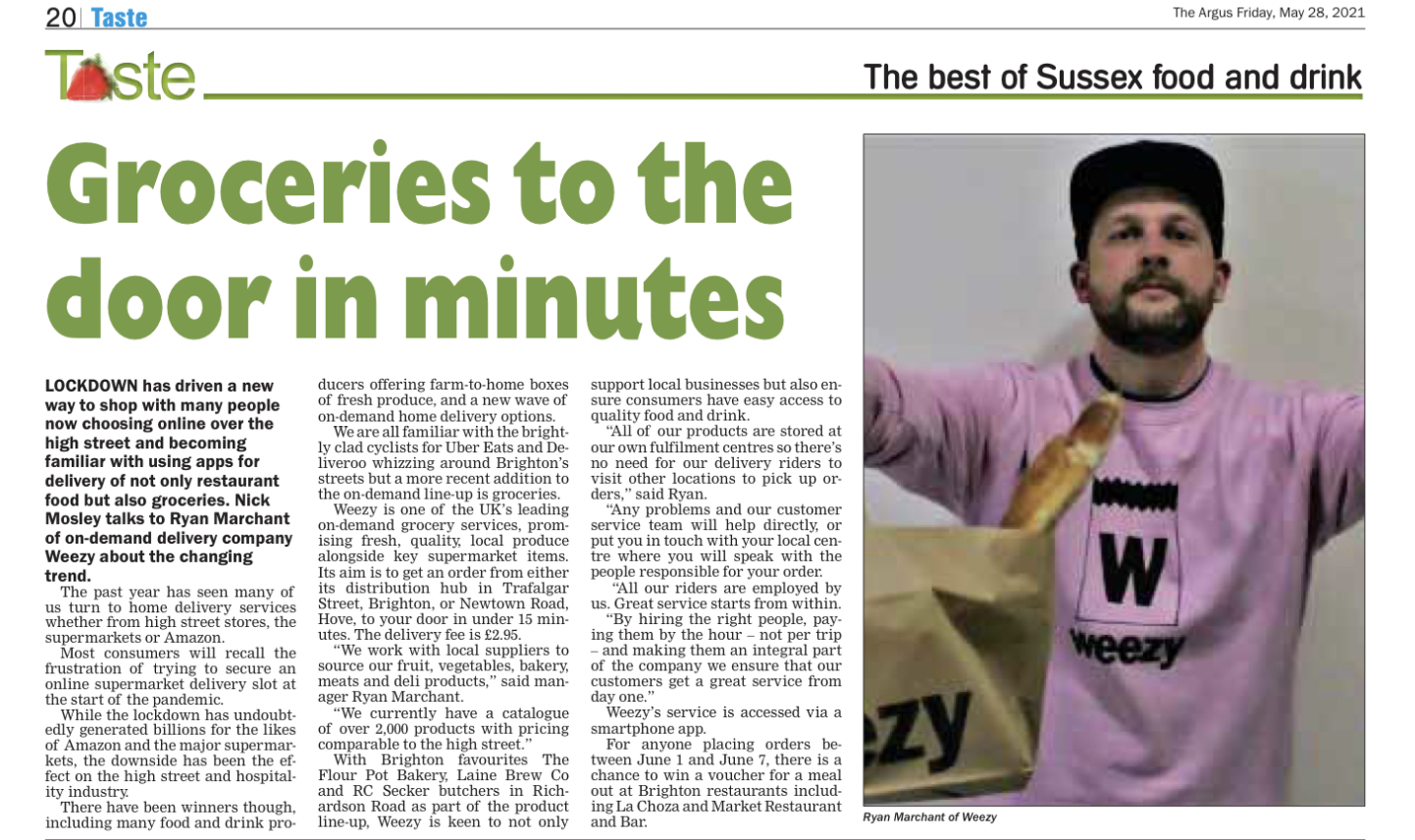
One of those was an on-demand grocery startup. I brokered them a national partnership with a UK aparthotel chain — a company with seven locations around the country at the time — and landed them a feature in the regional press, in a paper pulling around a million monthly readers back then. For a favour, that's a serious amount of PR and partnership value to put someone's way.
There's a selfish reason in it too: free work lets me flex muscles my day-to-day doesn't. PR and partnerships aren't part of my regular remit — I've done some before, like the hotel partnerships I ran for SLEEEP — and doing it for nothing is how I keep the reps up.
D2C e-commerce marketing agency · Brisbane, Australia
Built a way to trace every signed client back to the first ad that reached them — for an agency where that journey takes months — working directly with the CFO.
I got this one by posting the founders a pitch deck as an Amazon print-photo package — the outreach tactic in the box below. Once in, I owned B2B lead generation for the agency: I designed, built and wrote the copy for their lead-gen back-end funnel, and ran lead data and client communications across the whole client lifecycle. I worked with them remotely from Taiwan for most of it, and carried on for a while after I moved back to the UK — but the time-zone gap meant working overnight, which I couldn't sustain long term, so I wrapped up. Two pieces of it stand out.
First, the strategy to monetise the leads most agencies simply discard — the ones that don't qualify. Instead of writing those leads off, we routed them into a down-sell and community that essentially nurtured them: educating them over time into exactly the kind of lead the agency wanted, ready to work directly with Right Hook. It turned written-off leads into long-term pipeline, improving lead quality while bringing acquisition costs down.
Second — and this is the one I'd point to — I worked directly with the CFO to build a system in Excel that traced the entire journey, from the moment a prospect first heard of them all the way through to a signed client. That tracing was the genuinely hard part: for an agency the gap between first contact and signing can run weeks to months, so tying a client who signs today back to the ad that first reached them a quarter ago is where most reporting falls apart. We pulled together every stage of the journey, worked out what each enquiry cost and what each genuinely promising one cost, tracked how many made it from one stage to the next, and grouped them into cohorts by when they first came in so we could follow each through while allowing for that long delay — so the business could finally see what an enquiry was really worth, rather than guessing.
I was fortunate enough to associate with Ryan as he worked on optimising the lead generation funnel and messaging flows for Right Hook Digital. Ryan's a very clever guy with a great sense of humour.
One of the biggest nuggets of wisdom Ryan taught me was: 'Simplicity is the key to effective communication'.
If you're looking for a marketing strategist with a wealth of experience, I would not hesitate in recommending that you reach out to Ryan.
James Brooks, Right Hook Digital
2019
Based in Taiwan · taught English online
Remote, from Taiwan · via Bibo
For the best part of three years around this period I was based in Taiwan — it was home while I flew out for the Hong Kong and California work. Between engagements I taught English online to students across Asia, mostly Japanese. I did it deliberately — to get sharper at explaining complex things simply, which turns out to be most of the job in marketing too. One of the people I helped keep their English sharp, through conversation, was a Tottenham first-team footballer.
2019
US supplement brand — Lifecycle & Retention
DTC superfood supplement brand · California, US
Rebuilt their lifecycle in 90 days — email revenue up 62%, at 17× ROI.
+62%email revenue17×ROI on email+66%subscription reactivations+39%active users
Ninety days, on-site in California, with a family-owned US supplement brand. They had a great product and a loyal base, but an underused CRM and limited time — I had three months on the ground to plan it, build it and get results before I flew home.
The brief was to unify their marketing, so I started with the data. I built a proper customer persona from their past Facebook, Google Analytics and Instagram data, then looked at the channels. The picture was clear: a brand that had been in business many years, with thousands on their email list and a database of genuinely loyal customers, but email that was barely used. Few flows, campaigns only as-and-when they had time, and weak revenue from it. Ads were run by a freelancer, and part of my job was to assess how well that was working — but their customer lifetime value was high, and the dormant list and loyal base were the biggest underpriced asset in the business. Email was simply the higher-leverage lever. There was no point pumping more traffic into a leaky back end, so the sequence picked itself: fix the back end first, then go all in on email.
First I plugged the leaks: I cut Facebook ad spend to zero and dialled Google right down while we worked out what was broken, confident the email lift would more than cover the short-term dip. It did. Then I rebuilt their whole email system in Klaviyo so that each customer sat in exactly one stage at a time and only ever saw a message once — no overlap, no spam — covering every stage of the relationship, from welcoming new customers, to keeping existing ones, to winning back lapsed ones, to rewarding the most loyal. With the back end fixed, they could turn the ads back on without wasting spend — sending traffic into a system that now converted and retained, instead of leaking.
Their most loyal subscribers were the obvious people to turn into advocates, so I reworked their rewards programme: instead of rewarding Instagram and Facebook follows (the click-throughs from the brand's profiles to the site were basically zero, so a follow sent almost no traffic anywhere that converted), I rewarded shares and referrals — turning the loyal base into reach. Shares did double duty: they put the brand in front of new people, and the engagement they generated could then be retargeted with ads for prospecting. I gamified the loyalty mechanics with time-boxed offers like triple points for the next 72 hours, and used on-site pop-ups to pull lapsed subscribers back in. And I added an automatic prompt that offered a subscription right at the second purchase — the moment a customer is most interested — rather than discounting everyone up front.
I managed the whole email operation. The lifecycle system — the flows, the segments, the triggers, and the words running through them — I built and wrote end to end. Nobody was going to catch a misfiring flow once I'd flown home, so I tested every one before it went live — trigger conditions, exit rules, each branch, test sends across devices, and deliverability testing with mail-tester.com. That was the highest-leverage work I could do in the time I had. To stay focused on it, I set up a semi-automated system to handle campaign management — still setting the strategy and overseeing that side myself. Both were built to last — the email flows and the campaign engine designed to keep running and compounding, not to need rebuilding.
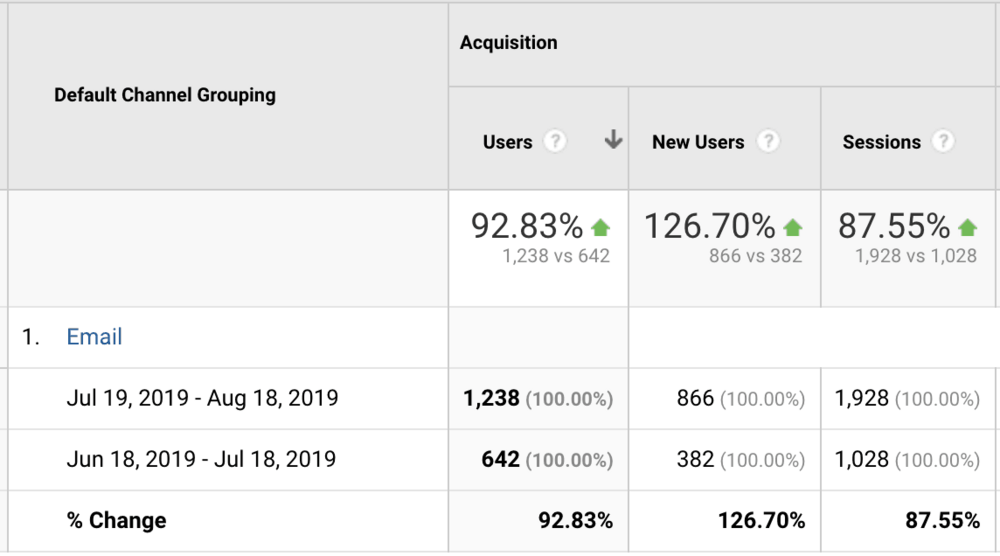
Email revenue up 60% inside the first 45 days, 62% over the full 90, with a 17× return on email spend, and email traffic doubled.
Email traffic roughly doubled period-on-period.
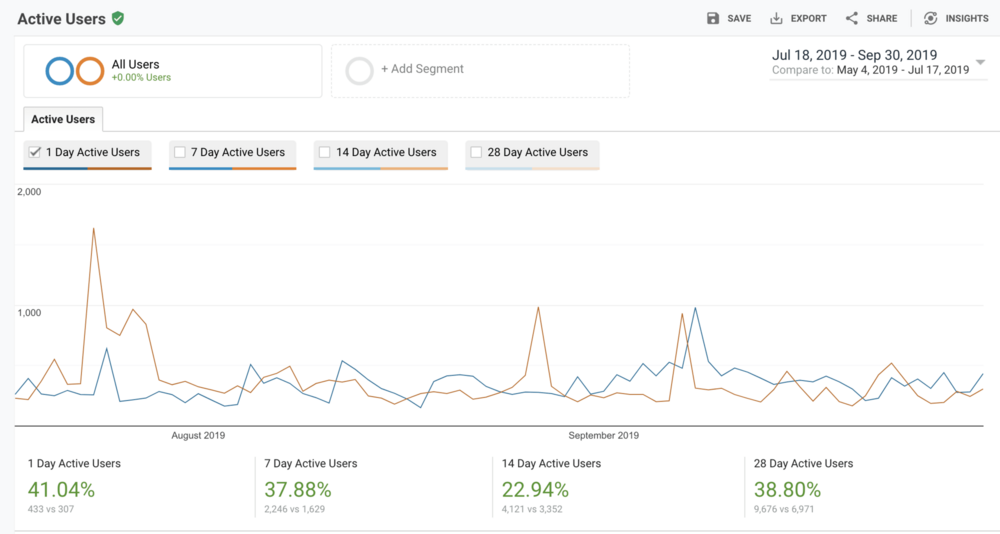
Subscription reactivations up 66%, upgrades up 16%, active users up 39%.
Active users up across every window.
Email grew to 31.5% of total revenue.
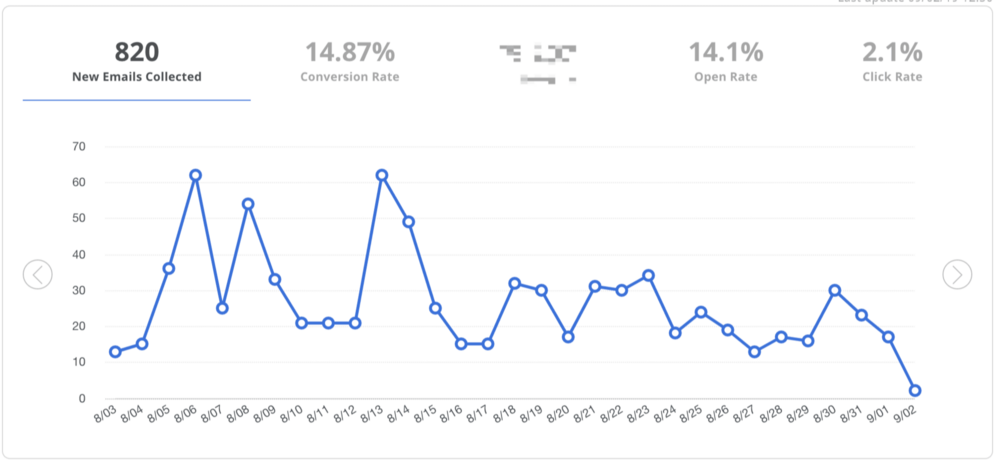
In the first 30 days: 820 new email opt-ins at a 14.87% opt-in rate, and customer referrals up 30%.
Email capture in the first month — 820 opt-ins at a 14.87% rate.
The second-purchase trigger compounded: new subscriber sign-ups grew sharply month over month, and cancellations fell too — because these were people who already knew they wanted the product, not customers pulled in by a discount.
Email management down to under an hour a week — a system built to last.
They were also raising a funding round while I was there, so I helped on investor prospecting too: I pulled the health-and-wellness investors off AngelList, filtered them down, and mapped out an outreach campaign to the ones that actually fit.
California had its moments outside the work, too — it's where I crossed paths with Kyle Kuzma of the LA Lakers.
Ryan is an outstanding professional with extraordinary skills, work ethic and integrity. His knowledge of digital marketing and ability to solve problems seems almost intuitive and is guided precisely by his unrelenting focus on delivering winning results.Founder — US supplement brand
Reverse-engineered the booking-platform algorithm and drove 900+ reviews into the top brackets.
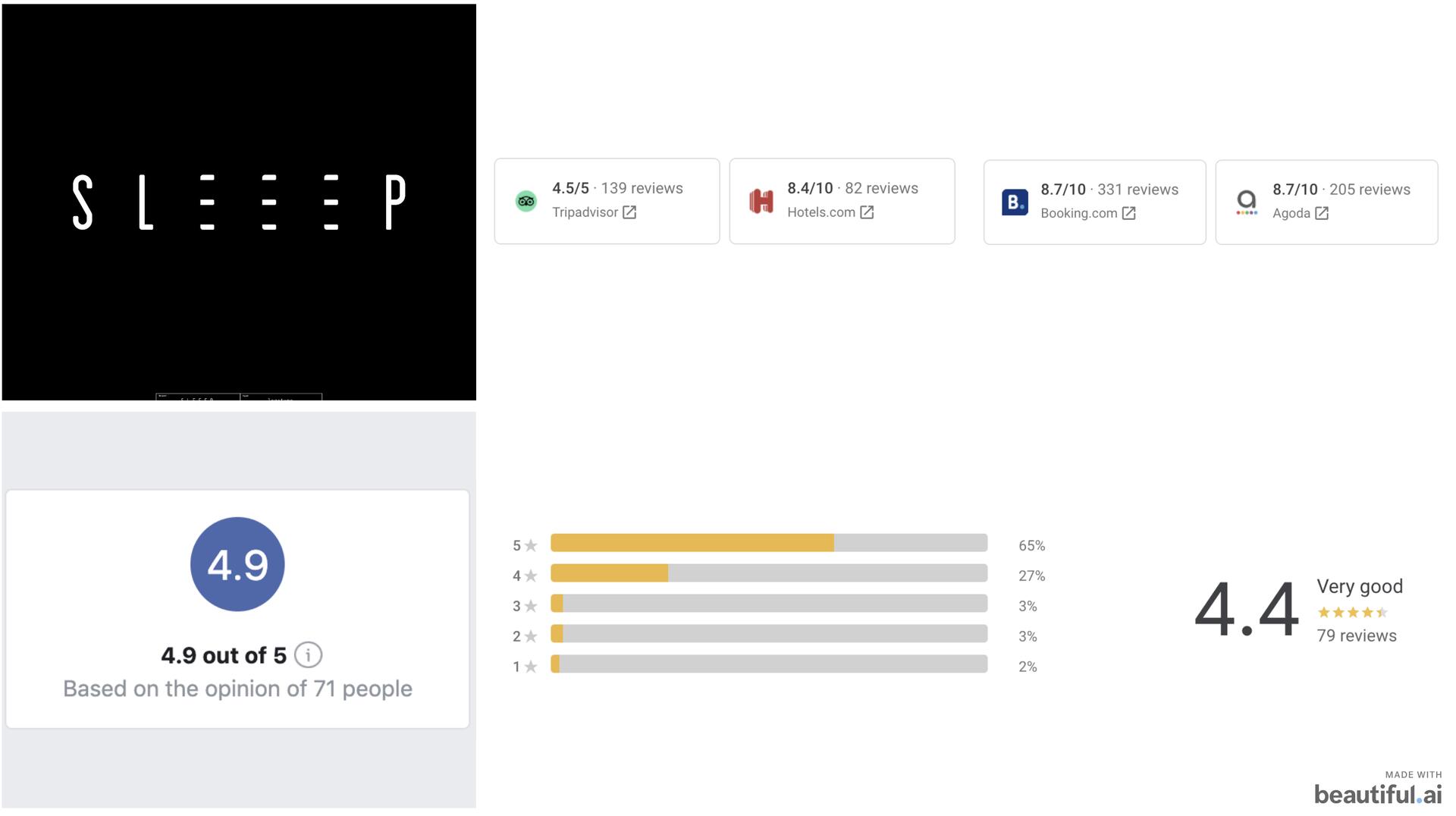
900+positive reviewsTopbrackets on TripAdvisor, Booking, Agoda, Hotels.com
A wellness-tech hospitality brand with an unusual model: it sold sleep by the hour — 30-minute, 60-minute and longer naps as well as overnight rooms. The audience split two ways. Locals used the short naps to rest mid-commute — Hong Kong is expensive, so many live far out and travel in. International visitors, meanwhile, booked through the online travel agencies, and that side was mine. For them, the booking platforms were everything.
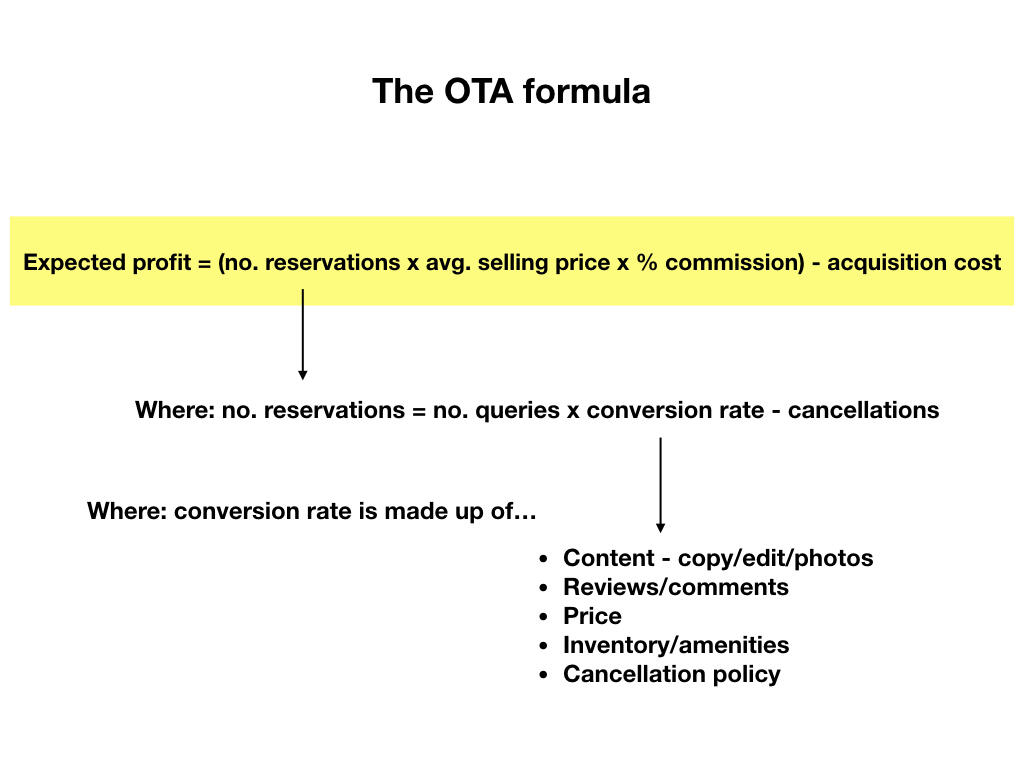
So I reverse-engineered how those platforms actually rank, broke it down to a model, and started with the single biggest lever I could move: reviews.
The OTA formula — breaking the ranking problem down to its drivers. Walkthrough →
Reviews were the lever. I built an ethical system that sorted happy guests from unhappy ones — quietly resolving the unhappy ones in private, and making it easy for the happy ones to post publicly. It generated 900+ positive reviews and pushed SLEEEP into the top review brackets across TripAdvisor, Booking.com, Agoda and Hotels.com. I break the method down here →
Review ratings across the major booking platforms.
The platforms reward completeness too, so I went through the listings in detail — tightening the copy and images and making sure every amenity a guest might filter for was actually there and accurate: hairdryers, showers, towels, the lot. Small things, but they move ranking and conversion.
I planned the social media strategy, hired for it and delegated the day-to-day — including a freelance designer I brought in to build out the feed, who turned out to be good enough that the business took her on permanently. I also helped launch the sister brand, Up-otel — a digital launch leaning on local PR, partnerships and social. I organised a multi-brand staycation giveaway for it, stacking seven local wellness and experience brands into the prize alongside stays at the hotel, and secured it a sponsored feature in Sassy Hong Kong to drive launch visibility. In the earliest days, with plenty of rooms still empty, I ran a low-cost visibility play: I reached out to a handful of micro-influencers and coordinated the operation end to end — booking their rooms and organising the stays — so they'd experience the hotel and share it with their own audiences.
On the working relationship: I flew to Hong Kong for a fortnight up front to meet the team and build the rapport that makes people easier to work with, went back a few times after, and ran the bulk of it remotely from Taiwan.
Early days · 2016–2017
2016 – 2018
Free work — earning my reps
I taught myself marketing from the ground up, then worked for free to earn real experience.
The Flux List (Marketing/Operations Executive, Jul 2017 – Apr 2018) had a content-writer opening. Rather than just apply, I messaged the founder, then called him — he was up in London, I was down on the south coast — and offered to come up and meet him in person. I made the trip for what was meant to be a 20-minute meeting, and we got on so well it turned into a three-hour conversation. That's a fair summary of how I operate: if something looks genuinely worth it, I'll go out of my way to chase it down.
At the agency, an influencer brand, I coordinated the strategic planning, creation and automation of their content, and researched and built relationships with the micro-influencers we worked with. Part of that was reaching out to genuinely remarkable people — astronauts, Olympians, world-record holders — putting written questions to them, and turning their answers into blog posts.
Scale Up Valley, a SaaS growth accelerator, was where I did client work — one early engagement was a quant-based growth plan built on partnerships and PR for a bootstrapped client, among others.
After seeing Ryan offer marketing advice I approached him for help on building a community/following through social media and email. He was very outgoing in his manner and seemed keen to help with new ideas for the company to progress.
Ryan easily adapted to bootstrapping our project and after some initial background info, he laid out a quant-based plan with a number of different creative strategies including partnerships with Educational institutes and collaborative PR campaigns. This was helpful because we were able to leverage these networks to reach our target audience faster and with a limited budget.
Ryan comes across as experienced in his methods while communicating his ideas and opinions succinctly.
Elias Arosemena — client, Scale Up Valley
2016 – 2017
Founder — Ubuntu Botanics
My own skincare brand
I started Ubuntu Botanics as a deliberate way to learn business by actually running one — a real brand, used as a vehicle to teach myself how the whole thing fits together.
First I had to decide what to build. I spent a while reaching out to people across all sorts of fields — seaweed, chlorella, natural ingredients of every kind — as far afield as Denmark, the Azores, Hawaii and New Zealand, having genuinely long conversations with them. That research is what led me to skincare.
Once I'd landed on it, the order of things went roughly like this:
Sourcing first. I went direct to suppliers in South America, South Africa and Australia for exotic oils — then ordered, blended and tested them at my kitchen table to see what actually worked.
Then the site. I built it myself on WordPress, teaching myself as I went.
Then the data. With the site live, I set up proper customer analytics — Google Analytics, Facebook Insights, surveys, even deep-dive phone calls.
Then content and reach. I wrote the content and promoted it, and got my first post ranking in organic search within a week.
I set it aside when the client work took off. It was never really about the exit — it was about the reps, and I got them.
Before all that
Range & foundations
Assistant lab technician, Brighton College — a short spell across biology, chemistry and physics.
Dive Control Specialist, Manta Dive — Gili Islands, Indonesia (2013–14) — qualified and taught divers one-to-one and in small groups, during years living and travelling across South-East Asia (Cambodia, Thailand, Laos, Vietnam, Indonesia and more). In Indonesia in 2013 I dived with manta rays and pygmy seahorses in Komodo National Park — still one of the best things I've done.
Studied Chemistry at Kingston University before leaving to go into business.
I didn't come up through marketing. I studied chemistry, but I knew I wanted to be in business — my granddad was a businessman, and I'd always wanted to do something in that world; I just didn't know what. So I poured pints in bars for a few years while I taught myself the different parts of business from the ground up, and eventually landed in marketing. The bar years were a slog, honestly. But it was a hard pivot I'm glad I made, because I genuinely love what I do now — enough that a lot of the work on this page I did for free, for the fascination of it.
Content and the psychology of why people buy run under everything I do, but I read widely around marketing and business more broadly — persuasion, PR, story, offers, retention, negotiation, how experiences are designed. The list below is a deliberate mix: recognisable names like Dan Kennedy and Alex Hormozi alongside more fringe, outside-the-field picks. I read beyond digital marketing on purpose — the sharpest perspective comes from adjacent worlds, not just my own:
Dan Kennedy— the hard edge of direct-response marketing; especially No B.S. Marketing to the Affluent and Brand-Building by Direct Response
Alex Hormozi— specifically Gym Launch Secrets, a practical playbook for local, brick-and-mortar service businesses, drawn from helping thousands of them
Sydney Biddle Barrows (the Mayflower Madam) — Uncensored Sales Strategies with Dan Kennedy: sell people the experience they actually want, not the product, and reverse-engineer the business the customer wishes you were in — plus her own memoir
Edward Bernays— Propaganda (1928), the founder of modern PR on the "engineering of consent": how public opinion is really shaped, from the man who wrote the playbook
Joseph Campbell— The Hero with a Thousand Faces and the Hero's Journey: the universal story structure beneath every myth, and the backbone of how brands tell stories that land
Hugh Hefner— The Playboy Philosophy, a founder articulating an entire brand worldview from the ground up — world-building as a business, and a real-world case study of the mythmaking above
Thomas Lalas— Retention Economics and the RCM Pyramid: why brands can look profitable on paper yet be broke in reality, and how repeat customers compound growth
Louis J. Prosperi— The Imagineering Process and The Imagineering Pyramid, which turn Disney's theme-park design principles into a method for building experiences that move people
And I'll make the hard call when the numbers back it. In California, on a three-month clock with ads already running, I argued for dialling the ad spend right down — a strong thing to ask of any brand — on the conviction that a rebuilt email engine would more than cover the gap. I'd run the numbers, and I trusted the read. It did.
What I enjoy most is moving between the two ends of a problem. I love the high-level call — crunching the numbers to find where a business is actually broken — and I love the small tactical details just as much, like posting a pitch deck inside an Amazon parcel to get past a gatekeeper. Zoom out to the strategy, zoom in to the execution, and back again.
Working together
Right now
Open to the right opportunity — permanent, contract or fractional, or consulting and audit work. Genuinely flexible on the shape of it.
Based
UK-based, and happy to travel for the right contract — I've done it before, living on-site in Hong Kong and California for the work.
A good fit for
Smaller, founder-led businesses — roughly £0 to eight figures — that need a scrappy operator to make things happen. I lean toward health, wellness, fitness and lifestyle, and toward businesses doing some good socially or environmentally.
Probably not
A narrow specialist role outside those strengths — pure paid-media buying, or organic-social content as its own discipline — or a role that's mostly about managing a big team. I'm an operator who likes being close to the work.
A scientist's instinct applied to business — reverse-engineer the system, find the highest-impact lever, build the machine that pulls it, and make it run.